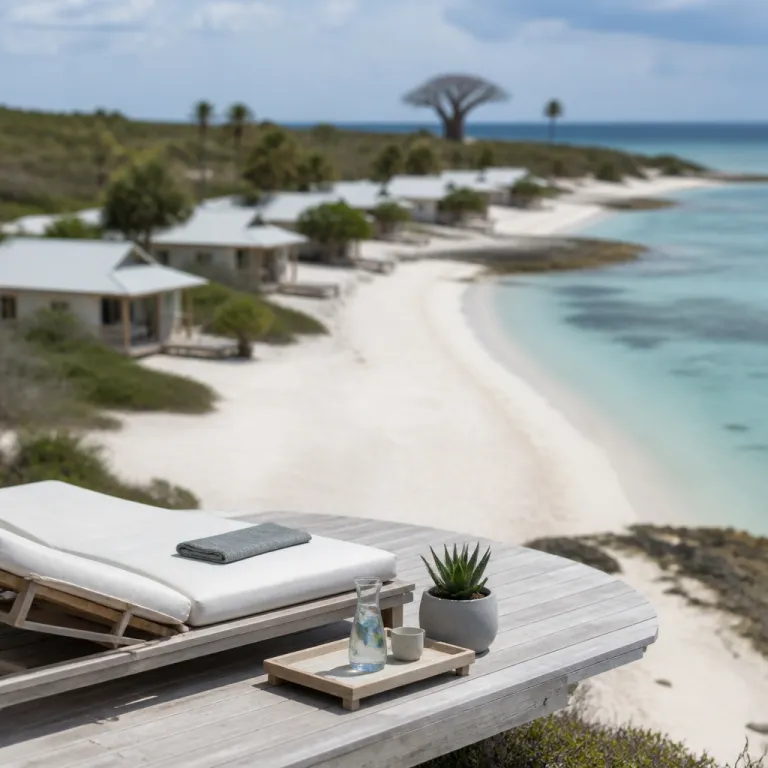
Madagascar wellness retreat nature: where isolation becomes the main treatment
Madagascar wellness retreat nature experiences begin long before the first massage. The simple fact that your trip here takes hours, often with a layover and a small propeller plane, creates a psychological distance from daily noise that most wellness retreats elsewhere try to simulate with rules and signage. From Paris or Johannesburg, for example, you can expect at least one connection and a total journey of 12 to 18 hours, which means that by the time you land in Antananarivo and complete your airport transfer to a coastal lodge or forest camp, your nervous system has already started to downshift.
Across Madagascar, wellness is less about a spa complex and more about what is absent during your stay. There is almost no light pollution outside the capital, so nights are genuinely dark, and the silence after dinner is broken only by surf, wind and the occasional lemur call, which makes sleep quality at even simple accommodation feel unexpectedly luxurious. This is the wellness-by-default thesis in action; the island’s remoteness removes Wi-Fi, traffic and visual clutter, and that absence becomes the core amenity for any wellness retreat or day retreat, whether you are staying near Andasibe-Mantadia National Park or on the quieter beaches south of Nosy Be.
For business travelers extending a work trip, this shift is profound. You might spend your first day answering emails in a shaded veranda, but by the second or third days, the combination of ocean air, equatorial darkness and slow service rhythms nudges you into a different pace of time. Many guests who arrive with a rigid schedule end up asking their guide to leave one day free, simply to sit, swim and let the natural wellness of Madagascar work without a formal program, often describing this unscheduled time as the most valuable part of their stay.
From spa menus to forest medicine: how Malagasy traditions shape modern wellness
Madagascar wellness retreat nature stays gain depth when they tap into the island’s long relationship with medicinal plants. Surveys by the World Health Organization and local universities suggest that around 70–80% of the population uses some form of traditional medicine, and that knowledge is increasingly woven into the treatment lists at high end retreats and wellness resorts. Local communities act as practitioners, while resort therapists and local healers collaborate to adapt herbal remedies, massage techniques and natural oils into spa rituals that feel rooted rather than imported.
At coastal lodges near a national park, such as properties on the fringes of Lokobe or Masoala, you might start a day wellness program with a forest walk led by a guide who points out leaves used for respiratory issues, then end with a massage using those same botanicals. Some properties now frame this as a structured wellness retreat, offering two or three days of gentle adventure that combine plant based treatments, slow yoga sessions and unhurried lunch dinner services built around seasonal ingredients. When guests read reviews later, the details that stand out are rarely the thread count; they remember the scent of ravintsara oil, the warmth of the therapist’s hands and the feeling of being held by a landscape that still relies on herbal knowledge.
Resorts that take this seriously tend to work year round with nearby villages, ensuring that the wellness retreats they market also support cultural preservation and sustainable harvesting. They respect local customs, engage directly with traditional healers and choose to use local ingredients rather than imported products, which aligns with the growing interest in holistic wellness worldwide. For a deeper look at how remote kitchens turn these same supply constraints into strengths, see this analysis of signature lodge cuisine in Madagascar, which mirrors the logic behind plant based spa treatments.
Sleep, silence and darkness: the invisible pillars of luxury on the island
On a Madagascar wellness retreat nature itinerary, the most transformative treatment often happens at night. Away from cities, the sky is ink black, and the absence of artificial light allows melatonin to rise naturally, which means many travelers report deeper sleep after just one or two days. Combine that with the lack of traffic noise and you understand why some executives say they feel more rested after a long weekend here than after a week at a city spa hotel, especially when they choose lodges that deliberately limit late night music and bar service.
High end retreats now lean into this, marketing “sleep sanctuaries” rather than only spa suites. Rooms are often designed with cross ventilation instead of aggressive air conditioning, so you fall asleep to ocean or forest sounds, and staff quietly adjust service hours so that breakfast can be taken late after a long night’s rest. Some properties offer gentle morning yoga on a deck or beach, not as a calorie burning session but as a slow joy step into the day, followed by a generous lunch dinner that uses local produce to stabilize energy rather than spike it, with sample menus listing grilled zebu, rice, leafy greens and tropical fruit instead of heavy, late evening buffets.
For couples on a romantic trip or executives decompressing after meetings, this focus on rest changes how they evaluate accommodation. They start to read reviews looking for mentions of quiet, darkness and mattress quality, not just pool design or wine lists, and they highly recommend lodges that deliver on these invisible luxuries. If you are planning a stay focused on rest, consider properties highlighted in this guide to what luxury honeymoon lodges in Madagascar actually get right, since many of those same strengths translate directly into restorative sleep.
Movement in wild landscapes: when the island becomes your personal trainer
Madagascar wellness retreat nature programs rarely revolve around a gym, because the island itself does the work of a personal trainer. A guided hike in a national park, where trails weave between baobabs and limestone pinnacles, offers functional movement, balance and cardio in a way that feels like adventure rather than exercise. Ocean swims off Nosy Be or lagoon paddles near Sainte Marie Island add low impact strength work, and the sensory immersion keeps even busy executives present in the moment.
Many wellness retreats now structure their days around this kind of movement in nature. A typical day retreat might start with serenity yoga on a wooden platform at sunrise, followed by a few hours of forest trekking, then a long, unhurried lunch dinner featuring grilled fish and local vegetables, and finally a sunset stretch on the beach. For women traveling alone or in small groups, curated retreats ladies programs pair these activities with safety conscious guides and clear details about places visited, so the adventure feels both exhilarating and controlled, with walking times and difficulty levels explained before you set out.
Over several days, this rhythm recalibrates your relationship with time and effort. Instead of counting repetitions, you count coves swum across or viewpoints reached, and your guide quietly adjusts the pace so that the experience remains accessible. Travelers often write in reviews that they arrived expecting a spa heavy wellness retreat but left feeling stronger simply because they had walked, climbed and swum through Madagascar’s varied biomes, which is why we highly recommend choosing itineraries that prioritize outdoor movement over indoor machines.
Digital detox, women focused escapes and how to book the right retreat
For many guests, the defining feature of a Madagascar wellness retreat nature stay is the deliberate scarcity of connectivity. Some lodges offer Wi-Fi only in a single lounge for a few hours each day, framing this as a benefit rather than a flaw, and the result is a genuine digital detox that forces even the most connected executive to close the laptop. Properties report that after the first day, when guests nervously check messages, most people lean into the disconnection and start timing their online sessions like short, controlled meetings.
Women in particular are gravitating toward curated wellness retreats that combine this digital quiet with safety, community and gentle structure. Day women programs and longer retreats ladies itineraries often include small group yoga, guided journaling, and shared dinner tables that remain screen free, which creates a sense of warm, low pressure connection. These trips operate year round, with some operators noting that sep oct and oct nov bring cooler air in the highlands, while jul aug and aug sep are ideal for whale watching on the east coast, and nov dec offers lush green landscapes after early rains.
When you reserve, pay attention to practical details that shape the experience. Check whether airport transfer is included, how many places visited are realistically possible in a day wellness schedule, and whether lunch dinner is flexible enough for late arrivals or early departures, since internal flights can shift by hours. For budgeting, mid range retreats often start around 150 to 250 euros per person per night including meals and guided activities, while more exclusive lodges can reach 400 euros or more, and for a curated overview of properties that already treat isolation as an amenity, our Nosy Be luxury hotels guide is a strong starting point for planning a retreat that feels both indulgent and grounded in the island’s natural rhythm.
How to read wellness reviews and plan your own reset
Planning a Madagascar wellness retreat nature escape starts with reading between the lines of guest feedback. Look for reviews that mention sleep quality, silence after dinner, and how long it actually takes hours to reach the lodge from the airport, because these details reveal whether isolation feels restorative or simply inconvenient. Comments about warm staff, flexible meal times and thoughtful airport transfer arrangements often matter more than the length of the spa menu.
Use each review as a practical guide rather than a mood board. When someone notes that a day retreat included both serenity yoga and a forest walk, ask the property for precise details about elevation, distance and time, especially if you are combining business meetings with limited days off. If several guests highly recommend a specific guide by name, that is usually a sign that the balance between safety, interpretation and pace has been well calibrated, and you can request that guide when you reserve.
For executives extending a work trip, the goal is to design a short but effective reset. That might mean two days at a coastal lodge with a focus on sleep and ocean air, followed by one day wellness program in a nearby national park, rather than trying to cross the entire island. As one local explanation puts it succinctly, “What are common traditional healing methods in Madagascar? Use of medicinal plants and herbal remedies. How do wellness resorts incorporate local traditions? By using local ingredients and traditional techniques in treatments. Is traditional medicine widely accepted in Madagascar? Yes, it's commonly practiced alongside modern medicine.”
FAQ: wellness and traditional practices in Madagascar
How do traditional Malagasy healing methods appear in luxury wellness retreats ?
High end lodges often collaborate with local healers to integrate medicinal plants into massages, baths and inhalation rituals. You might see ravintsara, niaouli or ginger used in oils and scrubs, with staff explaining their traditional purposes during a treatment. This approach respects local customs while giving guests a tangible connection to Madagascar’s long standing wellness culture.
Are wellness retreats in Madagascar suitable for solo women travelers ?
Many properties now design programs specifically with solo women and small female groups in mind. These retreats ladies offerings usually include structured yoga, guided excursions with vetted guides and communal dinner seating that encourages low key socializing without pressure. When you reserve, ask for clear details on security, airport transfer arrangements and how remote the accommodation is, so you can match your comfort level with the degree of isolation.
Is traditional medicine widely accepted alongside modern healthcare in Madagascar ?
Traditional medicine is used across rural and urban areas, often in parallel with modern clinics and hospitals. Many Malagasy families rely on herbal remedies for everyday issues, turning to formal healthcare for more serious conditions, which means wellness resorts can draw on a living, respected knowledge base. Guests interested in this aspect should choose retreats that openly state how they work with local communities and healers.
What is the best time of year to plan a wellness focused trip ?
Wellness retreats operate year round, but the character of your stay changes with the seasons and regions. Cooler, drier months suit hiking in highland national parks, while warmer periods favor ocean based activities and long evenings on the terrace after dinner. Rather than chasing a single “best” month, align your dates with whether you prefer forest treks, whale watching or simply long, quiet days by the sea.
How many days should I plan for a meaningful wellness reset in Madagascar ?
Given the travel time, a minimum of five to seven days on the ground allows your body to adjust and your mind to slow down. Executives combining work and leisure often spend two or three days near their meeting city, then move to a more remote lodge for another three days of focused rest and nature based movement. The key is to leave at least one day free of scheduled activities, so the island’s natural quiet can do its work.