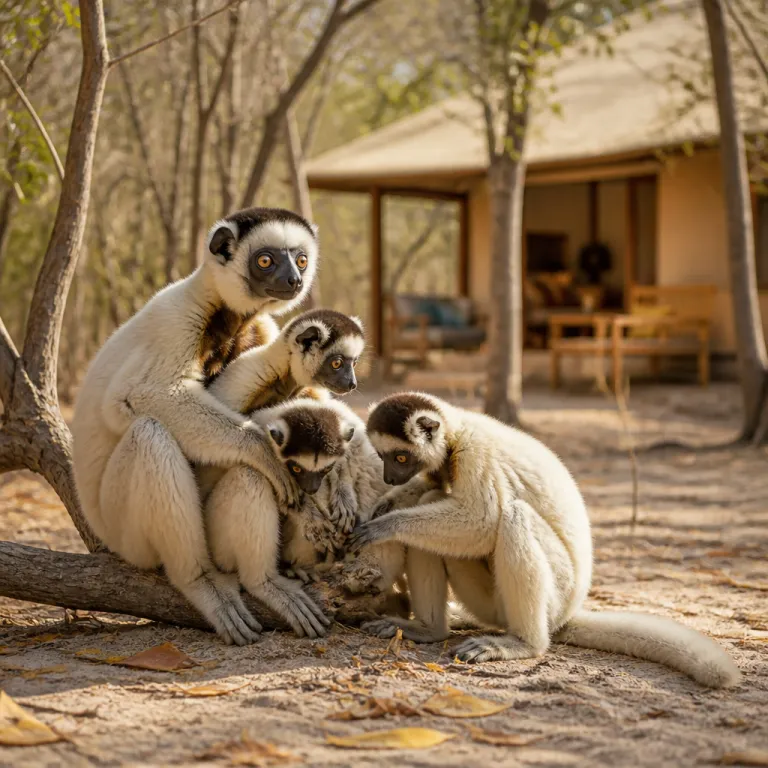
Why July Is the Best Time for a Berenty Reserve Madagascar Family Escape
July sits at the heart of the dry season in southern Madagascar, and that timing quietly transforms a family stay at Berenty Reserve into one of the most rewarding wildlife experiences on the island. Daytime temperatures are generally mild and comfortable, often around 20–25°C (68–77°F), with cool, dry air and very little rainfall, so the spiny forest and gallery forest trails stay firm underfoot, which matters when you are guiding small legs through the wild. For a premium family trip that balances comfort, wildlife and ease, this is one of the most reliable months to align your travel dates with nature’s own calendar.
Berenty is a privately managed reserve near Amboasary Sud, reached overland from Fort Dauphin on a track of roughly 80–90 km that usually takes about three to four hours by 4x4 in the dry season, and its relatively compact size keeps the experience intimate for every family. Because this private reserve has been welcoming guests for decades, the lemurs are habituated and calm, so close encounters with ring tailed lemurs and brown lemurs feel natural rather than staged. When you book a trip here in July, you step into a landscape where Madagascar wildlife moves at its own pace, yet the infrastructure quietly supports mid range and higher end expectations for accommodation and guiding.
For parents weighing different national park options across Madagascar, the contrast is clear and practical. A large national park can feel overwhelming with long transfers, variable guide quality and less predictable wildlife viewing, while Berenty’s scale and long term management keep visitor numbers controlled and the experience focused. If you want a July visit to Berenty Reserve that feels curated rather than chaotic, this is the time to travel when logistics, climate and wildlife all work in your favor.
Families often ask about the best time to visit Berenty Reserve, and the on site team answers consistently: "June to November during the dry season." July sits right in the middle of that window, which is why many specialist tour operators recommend it as the best time for first time family travel to southern Madagascar. When you plan your trip around this dry season sweet spot, you reduce weather related disruption and give children an excellent chance of seeing Verreaux’s sifakas and other species on relaxed, unhurried walks.
Verreaux’s Sifakas, Ring Tailed Lemurs and the Family Friendly Forest Rhythm
By July, the dry season has reshaped the forest structure around Berenty Reserve, and that matters for how children will actually see wildlife. With less foliage and no recent rain, Verreaux’s sifakas spend more time crossing open ground between trees, creating those famous “dancing” moments that even a tired child can follow. Field observations from Berenty and other southern Madagascar sites note that mating in this species often occurs from late June into July, which helps explain the heightened activity and vocal exchanges you may witness at this time of year. The combination of spiny forest, gallery forest and open clearings turns a family walk at Berenty in July into a sequence of short, high impact wildlife encounters rather than a long, exhausting hike.
Early July often coincides with the sifaka mating season, and guides at this private reserve are adept at reading behavior, then positioning families at a respectful distance. Because the lemurs are habituated, ring tailed groups often move through the Lodge Berenty grounds, their striped tails weaving between paths and bungalows while guests finish breakfast. For parents, this means you can keep some wildlife viewing close to your accommodation, which is a good way to balance younger children’s energy with the desire to see Madagascar wildlife in a natural yet accessible setting.
Brown lemurs and mouse lemurs add another layer of interest, especially when guides explain how each species uses the forest differently during the dry season. On a typical July visit, your family may see Verreaux’s sifakas leaping through the gallery forest, ring tailed troops sunning themselves on sandy clearings, and brown lemurs foraging in the canopy, all within short walking distances. This density of wildlife activity is one reason many experts recommend Berenty over more dispersed national parks for families planning their first serious wildlife trip.
The human side of the experience matters just as much as the wildlife, especially for a premium family audience. Berenty Reserve works with local guides and conservation organizations, and that partnership model echoes the ethos you find in community owned stays elsewhere in Madagascar, such as the projects highlighted in our guide to community owned stays in Madagascar. When you arrange your visit through a specialist platform, you not only secure good accommodation and reliable transfers from Fort Dauphin, you also support a network of qualified guides whose livelihoods depend on long term conservation of this private reserve.
Night Walks, Child Friendly Pacing and How to Structure Your Stay
Once the sun drops behind the spiny forest, Berenty Reserve shifts into a different register, and families who plan carefully can make the most of it. Night walks here are guided, tightly controlled and tailored to the age of the youngest child, which is crucial when you are moving through wild habitat after dark. For a July family itinerary at Berenty, two or three nights on site usually works well, giving you time for both day and night activities without rushing.
On these evening outings, guides use red filtered torches to pick out mouse lemurs, sleeping birds and, with luck, the elusive giant jumping rats and tenrecs. Younger children usually enjoy the first forty five minutes, when the novelty of being in the forest at night is strongest and the chance of spotting small lemurs is highest, while older children and teens will appreciate longer, quieter walks. The key is to brief your guide clearly at the start of the trip, so they can adjust the pace, distance and wildlife focus to your family’s energy levels and comfort with the wild surroundings.
Because Berenty is a private reserve with integrated accommodation, you can return to your room quickly if a child tires or the night feels too intense. Lodge Berenty offers simple but upscale bungalows with en suite bathrooms, hot showers, mosquito nets and reliable electricity at set generator hours, which is exactly what most premium families want after a dusty day in the dry season forest. While this is not a polished city hotel, the combination of privacy, proximity to wildlife and attentive staff makes it one of the best mid range to upper mid range options for a family focused wildlife stay in southern Madagascar.
If your children respond well to nocturnal walks at Berenty, you can extend that theme elsewhere in the country, for example with the late night lodge based experiences featured in our guide to Ranomafana after dark. A well structured July journey that includes Berenty often combines this private reserve with one or two other regions, giving you a contrast between dry spiny forest, humid rainforest and even coastal coral reefs. When you plan your travel this way, each stop feels distinct, and your family will come away with a layered understanding of Madagascar wildlife rather than a single forest snapshot.
Where to Stay, How to Book and Pairing Berenty With Madagascar’s Coasts
Choosing the right accommodation is central to any July family plan for Berenty Reserve, because you want comfort without losing that sense of being in a genuinely wild place. Lodge Berenty remains the primary option inside the reserve, with bungalow style rooms set among tamarind trees where ring tailed lemurs and brown lemurs often pass within a few metres. For families who prefer a little more separation from the forest, some hotels in Fort Dauphin offer mid range and premium rooms, but staying outside the reserve means longer transfers and less flexible wildlife viewing times.
For most premium families, at least two nights inside the private reserve, then one or two nights in Fort Dauphin to decompress before or after the forest segment, works well. This pattern gives you a balanced mix between structured wildlife activities and relaxed coastal downtime, especially if younger children need a pool and a more conventional hotel environment. When you book trip logistics through a specialist platform such as mymadagascarstay.com, you gain a single point of contact for transfers, guides and accommodation, which is invaluable in a region where last minute changes can be difficult to manage.
Many families pair Berenty with a coastal stay where coral reefs and calm lagoons offer a softer counterpoint to the dry season forest. One elegant option is to add a few nights on Île Sainte Marie, using our refined guide to luxury island stays in Madagascar to select the right property for your family. This combination of private reserve, national park style experiences and coastal hotels creates a rounded Madagascar trip that feels both indulgent and educational.
When you are ready to confirm dates, use July as your anchor month, then work outward to secure flights, internal transfers and the limited rooms at Lodge Berenty. Contact your chosen operator early, as peak season departures with top guides and the best rooms often sell out quickly for the core dry season weeks. Plan with this level of detail, and your July family journey to Berenty Reserve will feel less like a standard package and more like a carefully edited chapter in your family’s shared travel story.
FAQ
What is the best time to visit Berenty Reserve with children ?
The best time to visit Berenty Reserve with children is during the dry season from June to November, when trails are firm and wildlife viewing is at its peak. July sits in the middle of this window, offering cooler temperatures and excellent visibility in both the spiny forest and gallery forest. For a family trip to Berenty in July, this period delivers a particularly reliable combination of comfort, safety and wildlife activity.
How many lemur species can families expect to see at Berenty ?
Berenty Reserve hosts several lemur species, including Verreaux’s sifakas, ring tailed lemurs and brown lemurs, which are the most frequently seen by visiting families. Because this is a private reserve with long term habituation, these lemurs often come very close, allowing children to observe behavior safely. Night walks may also reveal mouse lemurs, giving your trip a broader view of Madagascar wildlife without the crowds of a larger national park.
What type of accommodation is available at Berenty for families ?
Accommodation at Berenty consists mainly of bungalow style rooms at Lodge Berenty, which offer private bathrooms, hot water and simple but comfortable furnishings. These rooms sit within walking distance of the forest, so families can move easily between wildlife activities and rest time. Upscale bungalows with basic amenities are the norm, making this a good mid range choice for families who value location and wildlife access over urban style luxury.
Is Berenty suitable for younger children who are new to wildlife travel ?
Berenty is particularly suitable for younger children because walking distances are short, trails are relatively flat in the dry season and wildlife is unusually visible. Guides are experienced at adjusting the pace and length of activities, ensuring that even a first serious wildlife trip feels manageable. Parents can also retreat quickly to their accommodation if a child tires, which is harder to arrange in more remote national park settings.
How do I get to Berenty Reserve from Fort Dauphin ?
Most families reach Berenty Reserve by road from Fort Dauphin, using a pre arranged 4x4 transfer organized through a specialist operator or hotel. The journey typically takes three to four hours for the roughly 80–90 km route, so it is wise to schedule it during daylight and build in rest stops for children. When you book trip logistics in advance and maintain close contact with your provider, the transfer becomes a scenic introduction to the dry season landscapes of southern Madagascar.