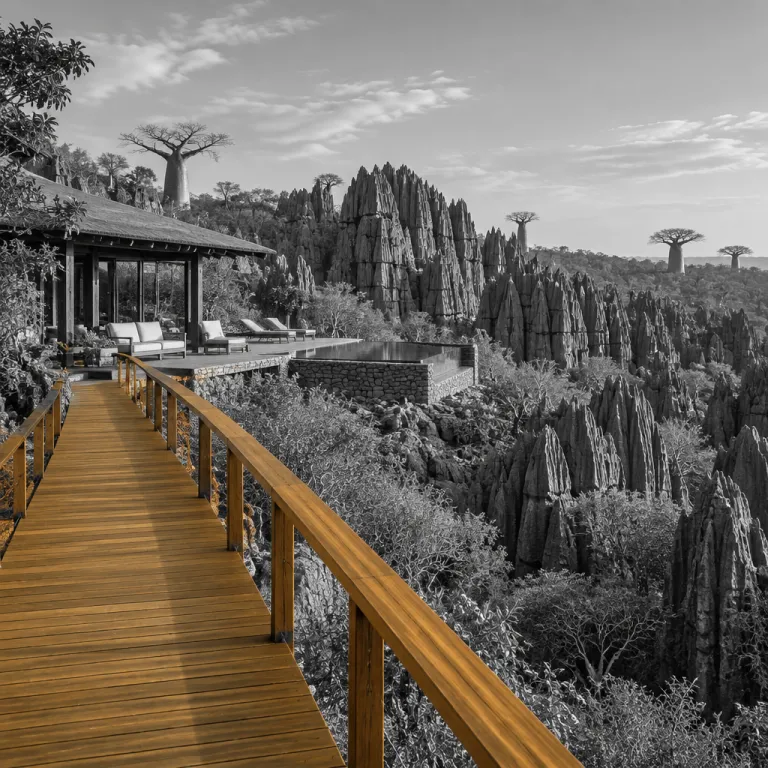
Madagascar tsingy landscapes and how they shape luxury travel choices
The madagascar tsingy landscapes reshape how discerning travellers plan their stays. In western Madagascar, the dramatic limestone pinnacles of the tsingy create a stone forest that demands thoughtful logistics and carefully chosen luxury or premium hotel options. Understanding how each national park and nature reserve connects by car, ferry, and pirogue helps you match your preferred comfort level with the right itinerary.
Most travellers first hear about Tsingy de Bemaraha National Park when they start planning a madagascar national circuit. This UNESCO heritage site, often called a limestone cathedral, combines big tsingy plateaus, deep canyons, and hidden cave systems that require a certified guide and reliable support from your hotel or lodge. Because the park Madagascar infrastructure is limited, premium properties often include transfers by 4x4 car, a canoe ride on the Manambolo River, and timed entries into the strict nature zones of the bemaraha strict reserve.
Luxury travellers usually balance time between the western stone forest and the northern red tsingy near Diego Suarez. The red tsingy formations, also known as Tsingy Rouge, are carved from fragile madagascar red clay and sandstone rather than hard limestone rock, so access and conservation rules differ from those at tsingy bemaraha. Choosing hotels that coordinate early morning visits to both red tsingy and nearby national parks lets you enjoy the most beautiful light while avoiding heat and crowds.
Choosing luxury hotels around tsingy bemaraha and the western stone forest
Planning where to stay near tsingy bemaraha is the most strategic decision in any madagascar tsingy itinerary. The approach to Bemaraha National Park usually starts with a long drive by car from Morondava, followed by a ferry crossing and then a rough track into the bemaraha national area, so a comfortable hotel with strong logistics support is essential. Premium lodges here often bundle transfers, a dedicated guide, and timed excursions into both the big tsingy and small tsingy sectors of the park.
Within the bemaraha strict nature reserve, access is tightly controlled to protect the limestone rock formations and the surrounding dry forest. Only accredited guides can lead you across the metal ladders, suspension bridges, and narrow passages that define the big tsingy circuits, and the best hotels secure these limited slots well in advance. When you book a higher end property near this national park, ask whether they include equipment such as harnesses, headlamps for any cave sections, and a support vehicle for the roughest parts of the drive.
Many refined itineraries combine Tsingy de Bemaraha with a canoe ride or pirogue journey on the Manambolo River, which flows along the edge of the stone forest. Luxury operators often coordinate with your hotel to arrange a silent glide past limestone cliffs, small caves, and forested banks where birdlife gathers at sunrise. For travellers seeking a curated approach to luxury stays and refined circuits around Tsingy National Park in western Madagascar, it is worth consulting specialist planners such as those featured in dedicated tsingy national park luxury circuit guides.
Linking the tsingy with avenue of the baobabs and coastal retreats
High end travellers rarely visit the madagascar tsingy in isolation, because the west coast offers a natural arc that connects several of the country’s most beautiful landscapes. The classic route links the avenue baobabs near Morondava, the Bemaraha National Park stone forest, and then either a coastal resort or a private nature reserve further south. Choosing a premium hotel at each stage allows you to break the long drive into comfortable segments while still maximising time inside the parks.
The avenue of the baobabs, sometimes called avenue baobabs in travel plans, is not a formal national park but it feels like an open air cathedral of trees. Many luxury travellers choose a hotel near Morondava that offers sunset and sunrise transfers to this sandy track, pairing it with a later visit to the limestone tsingy bemaraha for a striking contrast between smooth baobab trunks and jagged rock formations. When your itinerary includes both the baobab avenue and the big tsingy, ask your operator to schedule flexible time buffers because road conditions can change quickly after rain.
Some itineraries extend from the western stone forest to coastal or island retreats where seclusion is the main luxury. On these routes, travellers often move from a rustic but comfortable hotel near the bemaraha national area to a higher end property on the Mozambique Channel, sometimes reached by 4x4 car and then ferry. For an in depth look at how premium travellers value privacy and space over heavy infrastructure on Madagascar’s shores, resources such as refined journeys along Baobab Alley offer useful context for combining the avenue of the baobabs with the tsingy landscapes.
Red tsingy, Diego Suarez, and northern Madagascar national parks
Northern Madagascar offers a very different madagascar tsingy experience, centred on the red tsingy formations near Diego Suarez. Here, the tsingy rouge landscapes are sculpted from soft madagascar red sediments rather than hard limestone, creating delicate spires that glow at sunrise and sunset. Because these rock formations erode easily, guides and hotels coordinate access carefully to protect the site while still allowing visitors to enjoy the most beautiful viewpoints.
Diego Suarez, also known as Antsiranana, serves as a gateway to several national parks and marine reserves that complement a visit to the red tsingy. Luxury travellers often base themselves in a seafront hotel in town or at a nearby nature reserve lodge, then arrange day trips by car to the tsingy rouge, the emerald sea, and the nearby forested areas. When planning, consider how much time you want to spend on the road versus relaxing at your property, because some drives between the coast and the stone forest style landscapes can be longer than they appear on a map.
Many high end itineraries in the north combine the red tsingy with Ankarana and Montagne d’Ambre National Parks, which feature caves, underground rivers, and lush forest that contrast with the dry bemaraha strict reserve in the west. In Ankarana, the limestone tsingy fields are smaller than the big tsingy of Bemaraha but still dramatic, and some circuits include cave visits where a guide explains the geology and local beliefs. Choosing hotels that understand both marine excursions and inland park logistics ensures that your madagascar national experience feels seamless, from coastal ferry crossings to forest hikes.
Logistics, access, and timing for a refined madagascar tsingy itinerary
Access to the main madagascar tsingy areas requires more planning than many first time visitors expect. Roads into Bemaraha National Park and some northern parks can be rough, and the combination of long drive days, ferry crossings, and occasional pirogue transfers means that a well organised hotel or operator is invaluable. Luxury travellers should prioritise properties with proven experience in coordinating 4x4 car logistics, local guides, and flexible timing for national park entries.
For the western stone forest, most itineraries start in Morondava, continue past the avenue baobabs, then reach the Manambolo River area where canoe ride or pirogue excursions begin. From there, travellers enter the bemaraha national zone and the bemaraha strict nature reserve, where access to the big tsingy circuits is limited each day for safety and conservation reasons. Booking a premium hotel that pre reserves your slots with accredited guides ensures you spend more time on the limestone rock formations and less time waiting at park offices.
In the north, access to the red tsingy and nearby national parks is generally easier but still benefits from careful timing. The tsingy rouge site can become very hot by midday, so many hotels recommend early departures by car, followed by a return to the coast or forest lodges for a relaxed afternoon. Whether you focus on the western heritage site of Tsingy de Bemaraha or the northern madagascar red landscapes, allow extra time in your schedule for weather, road conditions, and unplanned photo stops.
How luxury hotels elevate the tsingy experience
High end hotels around the madagascar tsingy do more than provide a comfortable bed. They act as logistical hubs, coordinating national park permits, arranging expert guides, and timing your visits to the stone forest and forest trails for the best light and safest conditions. In remote areas such as the bemaraha strict reserve or the red tsingy valleys, this behind the scenes coordination often matters more than in room amenities.
Many premium properties near Bemaraha National Park or in Diego Suarez curate tailored excursions that combine limestone circuits, cave explorations, and gentle forest walks. A typical day might start with a dawn drive to the big tsingy, continue with a guided traverse of the rock formations, and end with a canoe ride or pirogue journey on the Manambolo River at sunset. Hotels that understand the rhythm of these landscapes help you pace your time, balancing demanding hikes with restorative hours by the pool or on a shaded terrace.
Some luxury itineraries extend beyond the main tsingy areas to include private islands or coastal nature reserves, where seclusion and space become the main attractions. In these settings, the hotel often arranges ferry transfers, small boat crossings, and even scenic flights that link the heritage site of Tsingy de Bemaraha with quieter stretches of the Mozambique Channel. For travellers interested in how high end properties manage low density stays and remote logistics, analyses such as the economics of empty private islands provide useful background when comparing options.
Designing a multi park Madagascar journey with comfort in mind
A sophisticated madagascar tsingy journey often weaves together several national parks and reserves rather than focusing on a single site. One popular arc links the avenue baobabs, the Bemaraha National Park stone forest, and then a southern or northern extension to other madagascar national highlights such as Isalo or Ankarana. When you design such a route, the choice of hotel at each stop determines how smoothly you move between limestone plateaus, red tsingy valleys, and forested canyons.
Travellers who value comfort usually limit the number of one night stays, preferring two or three nights in each key location. This approach allows enough time for a full day in the big tsingy, a relaxed canoe ride on the Manambolo River, and an unhurried visit to the red tsingy or tsingy rouge near Diego Suarez without constant packing and unpacking. By working with properties that understand both the strict nature regulations of the bemaraha strict reserve and the more flexible access rules in other national parks, you can maintain a consistent standard of service across very different environments.
When comparing itineraries, pay attention to how many hours you will spend each day in a car, on a ferry, or in a pirogue, because travel time can quietly erode your enjoyment. A well balanced plan might include two intensive days in the heritage site of Tsingy de Bemaraha, one or two gentler days around the avenue baobabs, and then several nights in a coastal or forest reserve where you can slow down. With this structure, the dramatic rock formations and caves of the tsingy become highlights within a broader, beautifully paced madagascar red and green landscape journey.
Key figures for luxury travel around the Madagascar tsingy
- Tsingy de Bemaraha National Park covers roughly 1 520 square kilometres, making it one of the largest protected limestone karst areas in Madagascar according to UNESCO, which helps explain the travel time required to explore both big tsingy and small tsingy sectors.
- The avenue of the baobabs lies about 20 kilometres north of Morondava on the west coast, so most travellers can reach it in less than one hour by car from their hotel, allowing easy pairing with longer excursions towards Bemaraha.
- Red tsingy formations near Diego Suarez are located around 50 to 60 kilometres from the city, and typical drives take 1.5 to 2 hours each way depending on road conditions, which influences how luxury properties schedule half day versus full day outings.
- Madagascar hosts more than 40 national parks and reserves managed by Madagascar National Parks, giving travellers many options to combine the tsingy stone forest with rainforest, dry forest, and marine nature reserve ecosystems in a single itinerary.
- UNESCO reports that Tsingy de Bemaraha was inscribed as a World Heritage Site due to its exceptional biodiversity and unique karst landscape, which has led to stricter visitor management and a growing role for high quality guides and well organised hotels.
FAQ about luxury stays near the Madagascar tsingy
What is the best time of year to visit the Madagascar tsingy in comfort ?
The most comfortable period for visiting the madagascar tsingy usually falls in the dry season, when roads are more reliable and park trails are safer. During these months, luxury hotels and lodges can run regular 4x4 transfers, ferry crossings, and pirogue or canoe ride excursions without frequent weather disruptions. Travellers who prioritise comfort should avoid the peak of the rainy season, when access to Bemaraha National Park and some red tsingy areas may be restricted.
How many days should I plan for Tsingy de Bemaraha in a luxury itinerary ?
Most high end travellers allocate at least two full days inside Tsingy de Bemaraha National Park, plus additional travel days on each side. This allows one day for the big tsingy circuits and another for smaller tsingy areas, Manambolo River canoe rides, or forest walks, all coordinated by your hotel and guide. With transfers from Morondava and time at the avenue baobabs, a comfortable itinerary usually includes four to five nights in the wider bemaraha national region.
Can I combine the western stone forest with the red tsingy near Diego Suarez in one trip ?
It is entirely possible to combine the limestone stone forest of Bemaraha with the red tsingy near Diego Suarez, but you should plan for internal flights. Many luxury itineraries start in the west with the avenue baobabs and Tsingy de Bemaraha, then continue by air to northern Madagascar for the tsingy rouge and nearby national parks. Hotels and specialist operators can coordinate these connections, ensuring that transfers by car, ferry, and pirogue fit smoothly around flight schedules.
What level of fitness is required for big tsingy circuits in Bemaraha ?
The big tsingy routes in Bemaraha National Park involve ladders, narrow passages, and some exposed sections, so a moderate level of fitness and surefootedness is important. Luxury hotels often work with experienced guides who can suggest circuits that match your abilities, from shorter walks to more demanding traverses of the rock formations. Travellers who prefer gentler activities can focus on small tsingy viewpoints, forest trails, and canoe rides on the Manambolo River instead.
Are luxury hotels available close to the main tsingy areas, or only in larger towns ?
While the highest concentration of upscale hotels sits in larger towns such as Morondava and Diego Suarez, there are increasingly comfortable lodges closer to both Tsingy de Bemaraha and the red tsingy. These properties may not match city hotels in every amenity, but they excel in logistics, guiding, and access to the national parks and nature reserves. Many travellers choose a mix, staying in a refined coastal or city hotel before or after several nights in a well run lodge near the stone forest itself.