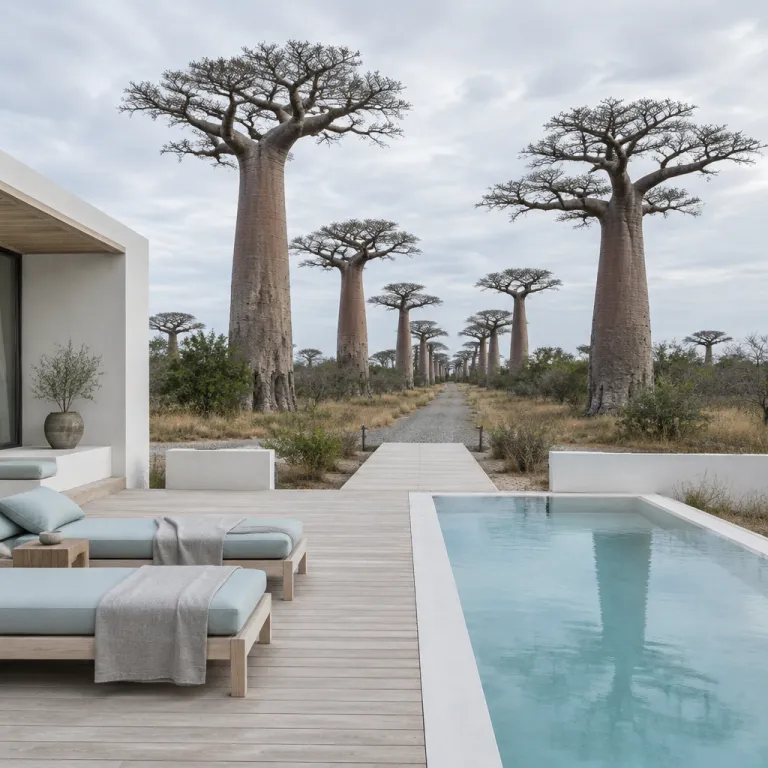
Baobab alley as a natural monument for discerning travellers
Baobab alley is one of Madagascar’s most emblematic landscapes, and it rewards travellers who plan carefully. This stretch of sandy road between Morondava and the hinterland forms a dramatic baobab avenue where towering trunks frame the sky in every direction. Luxury guests who value privacy, comfort, and authenticity will find that the surrounding area offers refined lodges perfectly placed for sunrise and sunset over the baobab trees.
The site is often referred to as Allée des Baobabs, a protected area where the iconic Adansonia grandidieri species dominates the horizon. These Grandidier baobabs, sometimes called baobabs adansonia, can reach more than 30 metres in height and create a cathedral like forest of columns. When you stand on the road Morondava that cuts through this natural monument, you see how the baobab species has shaped both the landscape and the lives of local people who live nearby.
For travellers booking premium accommodation, understanding the context of baobabs in Madagascar is essential. The baobab alley corridor is not a dense forest but rather a sparse alignment of baobab trees that once formed the edge of a larger ecosystem. Conservation efforts now focus on keeping this protected area intact, because the species Adansonia and especially Adansonia grandidieri face pressure from agriculture and unregulated development. Choosing a luxury lodge that supports conservation projects around the avenue baobabs helps ensure that future guests can still read the landscape as a living story of Madagascar’s west coast.
Choosing luxury stays near Morondava and the baobab avenue
Most high end travellers reach baobab alley via Morondava, a relaxed coastal town that serves as the main gateway. The road from Morondava to the Allée des Baobabs is unpaved, so staying in a premium lodge with reliable vehicles and experienced drivers makes the journey smoother. When you book, look for properties that mention guided transfers along the Morondava access road and early morning departures to the baobab avenue.
Luxury lodges in this part of Madagascar often sit between the coast and the inland avenue, allowing guests to explore both the beach and the baobab trees without long drives. Some properties offer private excursions to the alley of baobabs, including sunset picnics and photography sessions among the Grandidier baobabs. If you are passionate about gastronomy, consider how seasonal ingredients from the region influence lodge menus, and read about the dry season culinary traditions on lodge tables before you choose where to stay.
Guests who value sustainability should ask how each property contributes to the protected area around the avenue of baobabs that Madagascar is working hard to preserve. Some lodges support reforestation of baobab species and community projects that help local people live in balance with the forest. When you compare options, prioritise those that limit vehicle numbers on the baobab alley track and that brief guests on respectful behaviour among the baobab trees and the nearby villages. Specific lodge names and conservation partners are not listed here because standards and affiliations change frequently, so it is safer to request up to date details directly from your tour operator or accommodation.
How to read hotel standards for a baobab alley stay
Star ratings in Madagascar do not always match international expectations, especially in remote regions like the Allée des Baobabs corridor. A property that calls itself luxury near baobab alley may offer exceptional views of baobab trees but only basic infrastructure. Before you book, read detailed guest reviews and look for specifics about water pressure, electricity reliability, and transfer quality along the Morondava road.
For a refined stay near the baobab avenue, focus on concrete indicators rather than marketing language. Check whether rooms have proper mosquito protection, hot water, and secure storage, and ask how the lodge manages early departures to the avenue baobabs for sunrise. It is also wise to consult a specialised guide on how to interpret hotel standards in Madagascar so you can align your expectations with the realities of this protected area.
Many high end travellers appreciate smaller properties where staff know the local forest intimately and can explain the ecology of the baobabs Madagascar is famous for. When you read descriptions, look for mentions of naturalist guides who can interpret Adansonia grandidieri and other baobab species during walks around the baobab alley. A lodge that invests in training local people as guides usually offers richer experiences at the baobab alley site, because your hosts live nearby and understand both the street like alignment of trees and the wider landscape.
Designing an itinerary around baobab alley and Madagascar’s west coast
A refined itinerary around baobab alley often combines time at the avenue with coastal relaxation and inland exploration. Many guests fly into Antananarivo, connect to Morondava, then travel by road to the Allée des Baobabs for sunset among the baobab trees. From there, you can extend your journey north toward Kirindy forest, where different species Adansonia and other endemic wildlife complement the Grandidier baobabs of the main avenue.
Some travellers prefer to base themselves in a coastal lodge near Morondava and arrange day trips to the baobab avenue, returning to the beach each evening. Others choose to stay closer to the alley of baobabs for one or two nights, maximising time on the street like track that cuts through this natural monument. When planning, consider travel times on the Morondava road, because distances in Madagascar can be deceptive and the area around des Baobabs often requires slower driving.
To enrich your stay, combine the Allée des Baobabs with other highlights of Madagascar’s west, such as mangrove excursions or river trips that reveal how local people live along the coast. Luxury travellers who enjoy varied landscapes may also include a few nights at an upscale beach retreat, and you can research suitable options using a guide to premium beach resorts on Madagascar’s shores. This combination allows you to experience both the sculptural silhouettes of baobabs adansonia and the softer seascapes that define the island’s western edge.
Understanding baobab species, conservation, and community impact
The trees that line baobab alley belong mainly to Adansonia grandidieri, one of several baobab species native to Madagascar. These Grandidier baobabs store water in their massive trunks, allowing them to live through long dry seasons and dominate the skyline of this semi arid forest. Because the species Adansonia is slow growing, any loss of mature baobab trees along the avenue can take generations to replace.
The Allée des Baobabs has been designated a natural monument and a protected area, yet pressures remain from agriculture, charcoal production, and unregulated tourism. When vehicles stray from the main street like track of the alley of baobabs, they compact the soil around the roots of baobab trees and damage young saplings. Responsible luxury operators now limit group sizes, keep to the established road, and support projects that plant new baobabs that Madagascar needs for long term resilience.
Community engagement is central to conservation success around the baobab avenue, because local people live in villages that border the forest and depend on it for resources. Many premium lodges partner with associations that promote alternative livelihoods, helping residents protect des Baobabs while benefiting from tourism revenue. As a guest, you can ask how your chosen property supports education, reforestation of baobab species, and fair employment, ensuring that the magic of baobab alley continues to inspire future travellers.
Romance, photography, and timing your visit to baobab alley
Baobab alley has become a favourite setting for romantic journeys, especially around the famous Baobab Amoureux, a pair of intertwined trunks symbolising enduring love. Couples often plan private sunset picnics near this baobab amoureux, combining fine local produce with views of the glowing avenue. Luxury lodges can arrange discreet transfers so you reach the amoureux baobabs at the quietest times of day.
Photographers value the Allée des Baobabs for its clean lines and dramatic silhouettes, particularly when the low sun casts long shadows across the Morondava road. The best light usually occurs just after sunrise and before sunset, when the baobab trees stand out against pastel skies and the street like alignment of trunks becomes most striking. To capture both the main baobab avenue and the more intimate scenes around the Baobab Amoureux, plan at least two separate visits with different lighting conditions.
Seasonality also shapes the experience, because the surrounding forest changes colour and texture throughout the year while the baobabs remain leafless for long periods. During the dry months, dust on the road to the alley of baobabs can create atmospheric haze, while in greener periods the contrast between foliage and the pale trunks of Adansonia grandidieri becomes more pronounced. Luxury travellers who value comfort should coordinate with their lodge about road conditions, ensuring that vehicles are suitable for the current state of the baobabs alley track.
Practical tips for premium bookings and on site etiquette
Securing the right property near baobab alley requires early planning, because high quality rooms around Morondava and the Allée des Baobabs are limited. When you book, confirm whether your lodge includes guided visits to the baobab avenue, or whether excursions to the alley of baobabs are arranged separately. Clarify transfer times, vehicle standards, and whether sunrise or sunset outings to the baobab trees are part of the package.
On site, respectful behaviour helps protect this natural monument and supports the communities who live nearby. Stay on the main street like track of the Morondava access road, avoid climbing baobabs, and never carve names into the trunks of Adansonia grandidieri or any other baobab species. Ask your guide before photographing local people, and consider buying handicrafts or produce from stalls near des Baobabs to support the area’s economy.
For comfort, bring light clothing, a hat, and water, because the forest around baobab alley can be hot and exposed, especially in the middle of the day. Closed shoes are advisable, as the sandy allee des Baobabs can hide thorns and uneven ground along the avenue. By combining thoughtful preparation with a carefully chosen luxury lodge, you can experience the full drama of the baobabs Madagascar is renowned for while contributing positively to the long term protection of baobabs alley and its surrounding protected area. A simple checklist for travellers includes confirming 4x4 transfers, checking vehicle insurance and safety belts, asking about road conditions, and packing sun protection, insect repellent, and a light scarf or mask for dust.
Key figures about baobab alley and luxury travel in Madagascar
- Adansonia grandidieri, the dominant species at baobab alley, can reach heights of around 30 metres and trunk diameters of up to 3 metres, making it one of the largest baobab species in Madagascar according to botanical surveys by the Missouri Botanical Garden and other peer reviewed studies.
- Researchers estimate that several hundred mature Grandidier baobabs remain in the wider Morondava region, but only a few dozen line the core Allée des Baobabs, highlighting the vulnerability of this natural monument as reported by conservation organisations working in western Madagascar and summarised in regional biodiversity assessments.
- Domestic flights linking Antananarivo and Morondava typically take about one hour, while the road journey can exceed 12 hours depending on conditions, a difference that significantly influences itinerary design for luxury travellers according to Malagasy tour operator data and national transport schedules.
- Protected areas in Madagascar, including sites near baobab alley, contribute to a tourism sector that accounts for several percent of national GDP, with high value guests staying in premium lodges generating disproportionately strong local economic impact according to World Bank assessments and national tourism statistics.
- Studies on community based tourism in the Morondava area indicate that projects linked to the Allée des Baobabs can increase household income in participating villages by double digit percentages, underlining the importance of responsible luxury travel choices for local people; figures vary by project, so travellers should request the latest impact reports from their chosen operator.
FAQ about baobab alley and luxury stays nearby
How do I reach baobab alley from Antananarivo in comfort ?
The most comfortable route for luxury travellers is to fly from Antananarivo to Morondava with a domestic airline, then continue by 4x4 along the Morondava road to the Allée des Baobabs. Many premium lodges include private transfers to the baobab avenue in their packages. This combination minimises travel time and avoids long, tiring road journeys across central Madagascar.
How many nights should I stay near baobab alley for a premium experience ?
Two to three nights near Morondava or closer to the alley of baobabs usually allows for both sunrise and sunset visits to the baobab trees. This duration also gives time for a side trip to Kirindy forest or a relaxed afternoon on the coast. Guests who enjoy slower travel sometimes extend to four nights to balance excursions with time at their luxury lodge.
Is baobab alley suitable for families staying in luxury accommodation ?
Families can enjoy baobab alley, provided children are comfortable with heat, dust, and basic facilities at the site itself. Several upscale lodges near Morondava welcome families and can arrange shorter, child friendly excursions to the Allée des Baobabs. Parents should discuss vehicle safety, meal flexibility, and early bedtimes with the property before booking.
When is the best season to visit baobab alley in Madagascar ?
The dry season is generally preferred for visiting baobab alley, because roads are more reliable and skies are clearer for photography. During this period, the contrast between the pale trunks of Adansonia grandidieri and the surrounding landscape is especially striking. Luxury travellers should still confirm current road conditions with their lodge, as heavy rains outside the main dry months can affect access.
Can I stay directly at baobab alley, or only in Morondava ?
Most premium accommodation is located in or near Morondava, with day or half day excursions to the Allée des Baobabs. A few simpler guesthouses exist closer to the baobab avenue, but they may not meet luxury standards. High end travellers usually choose a refined lodge near the coast and rely on well organised transfers to reach the baobabs alley for key sunrise and sunset moments.