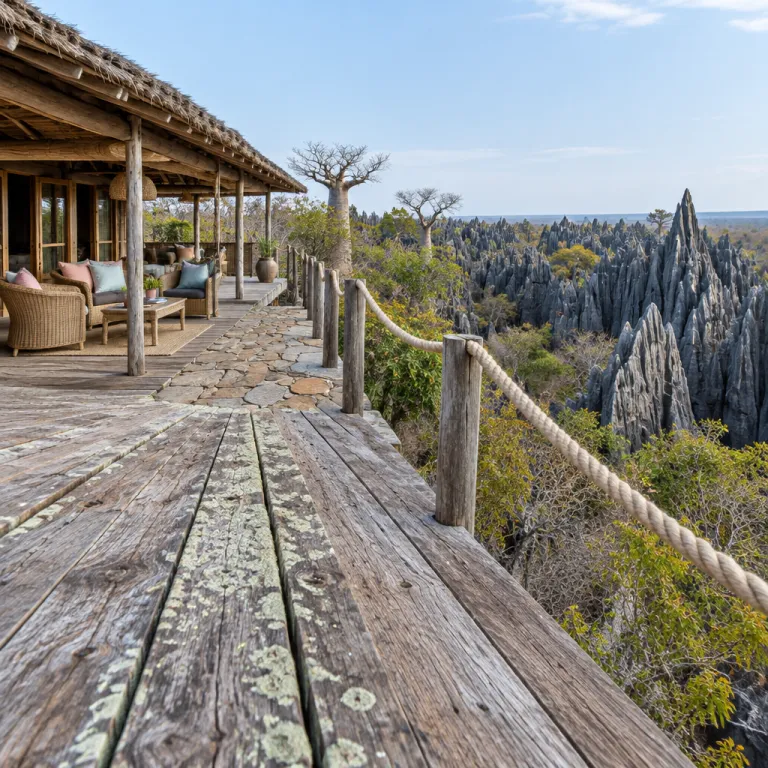
Why Tsingy National Park belongs on every luxury Madagascar itinerary
Tsingy National Park in western Madagascar offers a rare blend of raw nature and refined comfort. Around this UNESCO-listed landscape, a small circle of luxury and premium lodges allows guests to explore the famous tsingy formations by day and return to polished service at night. For travellers who value privacy and comfort, this balance between wilderness and elegance turns a complex journey into a seamless experience.
The park itself, officially known as Tsingy de Bemaraha National Park, protects a vast limestone plateau carved into razor-sharp pinnacles. These natural limestone “cathedrals” rise above dense dry forests and deep canyons, creating one of the most dramatic landscapes in any Madagascar national protected area. When you plan a stay near this World Heritage site, you are not just booking a room; you are securing privileged access to a strictly protected nature reserve that many scientists regard as a living laboratory, recognised by UNESCO since 1990 for its outstanding geological and ecological value.
Luxury travellers are often drawn by the park’s extraordinary endemic wildlife and plant species. Many species evolved here over millions of years, isolated on the Bemaraha plateau while water and erosion sculpted the tsingy de Bemaraha formations. High-end lodges and premium camps now curate guided circuits that reveal this scientific wonder in comfort, with private vehicles, flexible departure times, and expert naturalist guides who understand both the terrain and the expectations of discerning guests. As one long-time guide based near Bekopaka explained to us, “The tsingy look harsh from a distance, but once you are inside the rock forest, every step reveals something delicate and alive.”
Choosing the right region and hotel style for a Tsingy journey
Planning a luxury trip to Tsingy National Park starts with choosing the right region of Madagascar. Most travellers combine western Madagascar highlights such as the tsingy, the Manambolo River gorges, and coastal stays with more relaxed island escapes in the north. For example, many guests pair a few intense days around the Bemaraha plateau with a refined stay on Nosy Komba, using a Nosy Komba island elegance package for luxury-minded travellers to unwind after the rugged park circuits.
Near the park itself, accommodation options remain limited, which actually benefits travellers seeking exclusivity. A handful of premium lodges and intimate ecoluxury camps, such as Soleil des Tsingy or Le Grand Hôtel du Tsingy, sit along the dirt road that links the western Madagascar town of Morondava to the Bemaraha national sector. These properties focus on comfort where it matters most for a Tsingy de Bemaraha stay: reliable hot water, quality bedding, attentive staff, and flexible dining hours that adapt to early-morning departures for park excursions.
Guests who prefer a slower pace can extend their stay to four or five days around the park. This allows time for both the classic circuits on the limestone plateau and quieter activities such as sunset cruises on the Manambolo River or photographic sessions capturing images of the limestone cathedrals. Choosing a hotel with strong local partnerships also ensures access to the best guides, private 4x4 vehicles for the rough dirt road, and tailored circuits that match your fitness level and interest in endemic species. One sample itinerary might include two full days of tsingy exploration, a half-day river outing, and a final morning at leisure before flying onward to a coastal resort.
How luxury lodges curate circuits inside Tsingy de Bemaraha National Park
Inside Tsingy National Park, movement is controlled to protect the strict nature reserve and its fragile limestone formations. Luxury and premium lodges work closely with park authorities to design circuits that respect conservation rules while still allowing guests to explore the most impressive tsingy viewpoints. This collaboration ensures that each national park visit feels exclusive, with timed entries that avoid crowding on ladders, bridges, and narrow passages.
Most high-end properties offer at least two main circuit options on the Bemaraha plateau. One focuses on the upper limestone plateau, where suspended bridges reveal sweeping images of the tsingy de Bemaraha landscape and the dense dry forest canopy below. Another circuit follows lower canyons and caves, where water carved tunnels over thousands of years and where vegetation shelters shy species such as the tiny leaf chameleon and several nocturnal lemurs.
Because the terrain is demanding, luxury lodges pay close attention to pacing and safety. Private guides adjust the rhythm of each circuit, allowing more time for photography, scientific explanations about endemic plant species, or quiet appreciation of the national park scenery. Some guests prefer a shorter circuit in the morning and a relaxed afternoon by the pool, while others request a full day in the nature reserve followed by a massage and a refined dinner; both styles can be arranged when you book through a specialist platform that also offers refined hotels, villas and lodges in Madagascar. One recent guest described returning from a full-day circuit to find a private aperitif set up on a viewpoint terrace, watching the limestone turn gold at sunset.
From limestone cathedrals to river gorges: understanding the landscape
The landscape around Tsingy National Park tells a geological story that began millions of years ago. Long ago, the Bemaraha plateau was a vast limestone platform under shallow seas, where marine life left thick deposits of calcium carbonate. Over countless years, tectonic uplift and water erosion sculpted these deposits into the sharp tsingy formations that now define this World Heritage site in western Madagascar.
Today, visitors see this history written in stone as they walk through the park. The limestone cathedrals rise like frozen waves, while deep canyons channel seasonal water flows toward the Manambolo River. In some sections of the nature reserve, guides point out fossil fragments embedded in the rock, offering a scientific perspective that enriches the visual drama of the national park scenery.
The Manambolo River itself forms a tranquil counterpoint to the jagged tsingy. Luxury lodges often arrange canoe excursions along calm stretches of water, where guests glide beneath overhanging limestone cliffs and observe dense dry vegetation clinging to the rock. These outings provide different images of the park, highlighting how endemic plant species and animal species adapted to both the arid limestone plateau and the more humid riverine habitats that line the western Madagascar lowlands. On some departures, travellers also visit small riverside caves where local guides explain traditional stories linked to the canyon.
Wildlife, endemic species and the role of strict nature protection
Beyond its dramatic rock formations, Tsingy National Park is a sanctuary for endemic wildlife found nowhere else on Earth. The dense dry forests that cloak the Bemaraha plateau shelter lemurs, reptiles, and bird species that evolved in isolation as the limestone plateau rose and fractured. For luxury travellers, guided walks focused on wildlife offer a quieter complement to the more athletic tsingy circuits.
Among the highlights are sightings of the leaf chameleon, one of the smallest reptiles in Madagascar, which blends perfectly with the vegetation. Guides also search for rare bird species that rely on the park’s mosaic of habitats, from cliff faces to forest understory. Because this area is designated as both a national park and a strict nature reserve, access is carefully managed to limit disturbance, which in turn increases the chance of meaningful wildlife encounters during multi-day stays.
Premium lodges often employ or collaborate with locally trained naturalists who contribute to ongoing scientific monitoring of plant species and animal populations. Guests may be invited to join short citizen science activities, such as recording images of species along a circuit or noting water levels in seasonal pools. These experiences deepen understanding of why the Bemaraha strict protection status matters, and they show how high-end tourism can support conservation in Madagascar national protected areas when managed with care. Madagascar National Parks and the International Union for Conservation of Nature (IUCN) both highlight Tsingy de Bemaraha as a flagship example of this balance between research, protection, and carefully controlled visitation.
Logistics, comfort and booking strategies for a refined Tsingy stay
Reaching Tsingy National Park requires planning, and this is where a specialised luxury booking platform becomes invaluable. The approach to the park typically involves a combination of domestic flights within Madagascar and several hours on a dirt road, which can feel long without proper vehicles and rest stops. Premium agencies coordinate 4x4 transfers, schedule regular breaks, and ensure that water, snacks, and comfort items are always on hand during the journey across western Madagascar.
Once at the Bemaraha national sector, the focus shifts to maximising comfort during your days in and around the park. Many travellers choose at least three days on site: one full day for a major tsingy circuit, another for a mix of shorter walks and a Manambolo River outing, and a flexible day for rest or additional exploration. Booking early through a dedicated Madagascar tsingy specialist also helps secure the best rooms, which often have the finest views toward the limestone cathedrals or the surrounding nature reserve.
For travellers designing a broader Madagascar itinerary, it is wise to combine the rugged beauty of the Bemaraha national region with more classic coastal or island stays. A curated platform such as a Madagascar resorts luxury escapes collection can help match Tsingy National Park with other high-end properties across the country. This approach ensures that the most demanding segments, such as the dirt road to the Bemaraha plateau, are balanced by smoother transfers and restful nights in refined hotels elsewhere in Madagascar. Typical travel plans might link Morondava and the Avenue of the Baobabs with Tsingy de Bemaraha, then continue by air to Nosy Be or Île Sainte-Marie for a softer, beach-focused finale.
Integrating Tsingy with wider Madagascar highlights for luxury travellers
A journey to Tsingy National Park rarely stands alone in a luxury Madagascar itinerary. Many guests start with iconic western Madagascar sights such as the Avenue of the Baobabs near Morondava before continuing north toward the limestone plateau of the Bemaraha national sector. After several intense days among the tsingy formations, they often fly onward to coastal regions or islands where the focus shifts from strict nature exploration to relaxation and marine activities.
Combining the park with other national parks and nature reserves across Madagascar creates a richer understanding of the island’s diversity. For example, pairing the dense dry forests of Tsingy de Bemaraha with the rainforests of Andasibe or the spiny vegetation of the south reveals how different plant species and animal species adapted to contrasting climates. Luxury and premium hotels in each region provide consistent comfort, while locally guided circuits highlight the unique endemic species that make each national park special.
Thoughtful travellers also consider the cultural dimension of a Tsingy-focused trip. Many lodges work closely with nearby communities, sourcing food locally and supporting education or conservation projects that began years ago. By choosing operators who respect both the Bemaraha strict protection rules and local traditions, guests help ensure that the images of tsingy, the sound of the Manambolo River, and the fragile limestone cathedrals will remain intact for future generations who wish to explore this remarkable corner of Madagascar.
Key figures for luxury travel around Tsingy National Park
- The core protected area of Tsingy de Bemaraha National Park and strict nature reserve covers roughly 1,500 square kilometres, making it one of the largest continuous limestone plateau systems in Madagascar according to UNESCO and Madagascar National Parks.
- Botanical surveys have recorded several hundred plant species in the park, with a high proportion of endemic species that occur only on the Bemaraha plateau and surrounding western Madagascar forests.
- Travel times on the dirt road between Morondava and the Bemaraha national sector typically range from 8 to 10 hours in the dry season, which is why most luxury itineraries include at least three days near the park to justify the journey.
- The Manambolo River canyon reaches significant depths in some sections, creating the dramatic limestone cathedrals and cliff faces that define many classic tsingy images used in Madagascar tourism marketing.
- Madagascar hosts more than a dozen national parks and numerous nature reserves managed by Madagascar National Parks, and Tsingy de Bemaraha was the first of these limestone-based sites to be inscribed as a UNESCO World Heritage Site for both its geological and biological value.
Frequently asked questions about luxury stays near Tsingy National Park
How many days should I plan for Tsingy National Park in a luxury itinerary?
For a comfortable luxury stay, plan at least three days near Tsingy National Park. This allows one full day for a major tsingy circuit, another for a mix of shorter walks and a Manambolo River excursion, and a flexible day for rest or additional exploration. Travellers with a strong interest in endemic species or photography often extend to four or five days on the Bemaraha plateau.
Is the journey to Tsingy suitable for travellers who value comfort?
The approach to the park involves long drives on a dirt road, but premium operators use well-maintained 4x4 vehicles and schedule regular breaks. Luxury itineraries often combine this rugged segment with stays in high-end hotels before and after, which keeps the overall experience comfortable. If you are sensitive to long road journeys, discuss flight and transfer options with a Madagascar specialist before booking.
What level of fitness is required for Tsingy circuits?
Classic tsingy circuits involve ladders, narrow passages, and some exposed sections, so a moderate level of fitness and confidence with heights is helpful. However, guides can adapt routes, and there are shorter, less demanding circuits that still offer impressive images of the limestone cathedrals. Luxury lodges usually assess your comfort level on arrival and recommend suitable options.
Can I see wildlife such as lemurs and leaf chameleons during a luxury stay?
Yes, the dense dry forests of Tsingy de Bemaraha shelter several lemur species, reptiles, and many birds, including the tiny leaf chameleon. Early morning and late afternoon walks with experienced guides offer the best chance of sightings. While wildlife is never guaranteed, the combination of strict nature protection and expert local knowledge makes encounters likely during multi-day stays.
How far in advance should I book luxury accommodation near Tsingy?
Accommodation capacity near the park is limited, especially in the premium segment, so booking several months in advance is strongly recommended. This is particularly important if you plan to travel during the main dry season when the dirt road is most accessible and circuits on the limestone plateau are fully open. Early booking also helps secure the best guides and tailored circuits that match your interests.
Sources: UNESCO World Heritage Centre; Madagascar National Parks; International Union for Conservation of Nature (IUCN).